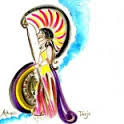
Fleur u Lee – Il-Mappa

Id-dar tal-Belt li darba kienet tan-bużnanna Lina kienet ilha aktar minn tletin sena ma tinfetaħ.  Minflok ċavetta, in-Nanna Kitty kellha muftieħ daqsiex.  Saħansitra mill-isprall tal-kantina kien qed jixref il-ħaxix ħażin.  X’riħa taqsam ta’ umdu ħarġet meta nfetaħ il-bieb!  L-għamara kienet kollha mgħottija b’lożor daqs dinja, li darba kienu bojod, iżda issa miksijin bit-trab. 

Fleur u Lee ħassewhom li kienu fil-film Ghostbusters, u f’kemm ilna ngħidu, telgħu u niżlu mis-sular ta’ kif tidħol, sa fuq il-bejt, u sal-kantina, xi tliet darbiet.

Kellhom subgħajhom jikluhom biex jaraw x’kien hemm taħt il-lożor.  In-Nanna Kitty qaltilhom, ‘Neħħuhom bil-mod għax inkella jtir ħafna trab.’

Daħlu fil-kamra tas-sodda, li kellha t-tieqa tagħha tagħti għal fuq il-baħar. Fleur u Lee żammew il-lożor mit-truf, u twewhom flimkien bil-galbu biex it-trab ġie n-naħa ta’ ġewwa.

Lee, ta’ kurjuż li kien, beda jiftaħ il-bibien tal-gwardarobbi u l-kxaxen tat-twaletta u tal-armarji.  Induna li r-raba’ kexxun, dak ta’ isfel,  tal-gradenza ma setax jinfetaħ. Għalxejn ġebbed u ġebbed … kien weħel.

Fleur, bil-ħlewwa kollha, reġgħet għalqitu, tatu xi żewġ skossi ħfief, u ppruvat tiftħu… u din id-darba nfetaħ. Indunat li kien hemm invilops mitwija pulit fih.  “Ara! Għalhekk kien qed iżomm, mela!” qalet.

In-Nanna Kitty fetħet l-invilops u fih sabet mappa. Pjanta ta’ dik l-istess dar, u salib aħmar kbir bil-kelma ‘Hawn!’ ħdejh. X’ħin raw il-mappa, It-tfal bdew jaqbżu bl-eċitament. Flimkien, ippruvaw isibu l-post fejn kien jidher bil-kelma ‘‘Hawn’’ ħdejh fuq il-mappa, iżda kien kollu għalxejn.  Fejn suppost kien immarkat li hemm armarju, ma kien hemm xejn ħlief ħajt vojt.

Lin-Nanna Kitty ħebbritha qalbha, u ħabbtet ħelu ħelu mal-ħajt.  Il-ħoss tat-taħbita wera biċ-ċar li dak ma kienx ħajt solidu tal-ġebel, iżda njam miżbugħa eżatt bħat-tliet ħitan l-oħra, biex kollox ikun pariġġ. 

In-Nanna Kitty xejret daqtejn ta’ siġġu mal-ħajt.  Għamlet toqba kbira bid-daqqa li tat, għaliex bl-umdità l-injam kien sar tabakk. Neħħew il-bċejjeċ minn madwarha, sakemm deher biċ-ċar li l-kamra tas-sodda, qabel kienet ħafna akbar.

Kien hemm armarju moħbi wara t-taparsi ħajt, li fil-kxaxen kien fih ħafna boroż b’muniti li t-tewmin qatt ma kienu raw bħalhom. Kien hemm borża mmermra tal-ħarir li fiha kien hemm ħafna ċrieket u ċpiepet u msielet tad-deheb, imżejna bil-ħaġar prezzjuż.

Kulħadd baqa’ ssummat. Ħadd ma qal xejn. Kien jinstema’ biss il-ħoss tal-baħar ta’ taħt is-sur, donnu kien irid ikun jaf x’qed jiġri. In-Nanna Kitty u t-tfal ħadu kollox fuq is-sodda.

“Din… din mhux xi ħaġa li taqbad u toħodha, qisek sibt €2 barra,” qalet bil-kemm tinstema’. Għajnejha mtlew bid-dmugħ, għax ħasset il-piż li waqa’ fuq spallejha.

Fleur, li kienet sensittiva għall-bidliet fil-vuċi tan-nanna, resqet eqreb lejha. “Imma nanna… issa li d-dar hi tiegħek, dawn ukoll tiegħek, hux hekk?”

In-Nanna Kitty tbissmet tbissima ċkejkna, għaqlija. “Mhux dejjem hekk jiġri,  qalbi.”

Qagħdet bilqegħda fit-tarf tas-sodda, u ħadet nifs ‘l ġewwa. “F’Malta, jekk issib teżor, speċjalment jekk hu qadim ħafna, jew jidher li għandu valur storiku, il-liġi titlob li tinforma lill-awtoritajiet. Mhux għax iridu jeħdulek kollox, imma għax dak li hu antik, hu parti mill-istorja ta’ kulħadd.”

Lee fetaħ għajnejh beraħ. “Allura ma nistgħux inqassmuhom lil min irridu?”

“Lanqas inbiegħuhom, kieku?” żiedet Fleur, b’leħen aktar kawt.

“Ma tarawx,” wieġbet in-Nanna Kitty bil-ħlewwa. “Skont il-liġi, kull skoperta bħal din trid tiġi rrappurtata fi żmien qasir lis-Sovrintendenza tal-Patrimonju Kulturali. Jekk dawn il-muniti u l-ġojjelli jkunu antiki biżżejjed, jistgħu jitqiesu li huma teżor nazzjonali.”

Waqqfet ftit, u mbagħad kompliet, “Imma l-liġi mhix bla qalb. Normalment, min isib dik li jgħidulha “trovatura”, u min hu s-sid tal-post, ikollhom dritt għal kumpens, jew premju. Mhux dejjem bil-flus biss… kultant bl-għarfien li tkun għamilt dak li hu sewwa.”

It-tfal ħarsu lejn xulxin. L-eċitament kien għadu hemm, imma issa kien imħallat ma’ rispett ġdid, u forsi xi ftit diżappunt, ukoll.

“U l-bużnanna Lina?” staqsiet Fleur. “Għaliex ħbiet kollox?”

In-Nanna Kitty ħarset lejn il-ħajt imkisser. “Min jaf? Forsi kienet għaddejja minn żmien  diffiċli. Qatt ma tat ħjiel ta’ xejn. Forsi kienet qed tipproteġi dak li kellha. Kien x’kien, illum, ir-responsabbiltà hi tagħna.”

Qamet, u għalqet il-kxaxen tal-armarju bil-mod. “L-ewwel nagħmlu dak li suppost. Mhux illum, imma, għax ma nħossnix sew, bil-qatgħa li ħadt. Imbagħad naraw x’se jsir. It-teżor veru,” qalet, waqt li poġġiet idejha fuq spallejn it-tewmin, “hu li nafu nkunu onesti, anke meta ħadd ma jkun qed jarana.”

U l-baħar ta’ taħt is-sur donnu ħabbat mal-blat b’ritmu iżjed kalm.

L-għada filgħodu, id-dar tal-bużnanna Lina kellha awra differenti. Mhux għax laħqu naddfuha mill-għanqbut u t-trabijiet, iżda għax issa kienet taf li s-sigriet li kienet ilha ġġor bejn erba’ ħitan, kien inkixef. In-Nanna Kitty qamet kmieni ħafna, u reġgħet marret fid-dar. Perrċet it-twieqi beraħ, u ħalliet id-dawl jidħol fuq l-għamara, fuq it-trab, u fuq il-ħajt miksur li kien żvela kollox. Ftit wara, waslu t-tewmin.

Bil-kalma tagħha tas-soltu, għamlet telefonata. Leħinha kien ċar u sod. Kellmet lil min kellha tkellem, u spjegat x’sabet, fejn, u għaliex kienet temmen li s-sejba kienet importanti. Ma għaddiex wisq ħin qabel ma qalulha li kienu se jibagħtu lil min jifli s-sit.

Malajr waslu ż-żewġ uffiċjali, wieħed b’fajl mimli dokumenti, u l-ieħor b’żewġ kameras mdendla ma’ għonqu. Fleur u Lee reġgħu ħassewhom qishom f’film. Din id-darba, però, ma kienx hemm Peter Venkman, Ray Stantz, u Egon Spengler, għax din kienet storja ta’ vera.

L-uffiċjali investigaw, kejlu, ħadu r-ritratti ta’ kull borża, u ta’ xi uħud mill-muniti, u kitbu ħafna noti twal. “Dawn, araw, huma ta’ perjodi differenti,” qal wieħed minnhom. “Xi wħud jistgħu jkunu ta’ valur storiku kbir.”

Lee ma felaħx ma jistaqsihx, “Allura se teħdulhom kollha?”  

L-uffiċjal ħares lejh u tbissem. “Nieħduhom biex jiġu studjati u protetti. Imma dan ma jfissirx li min sabhom ma għandu ebda dritt fuqhom.”

Aktar tard, meta l-uffiċjali telqu, u fid-dar reġgħet waqa’ s-skiet, in-Nanna Kitty qagħdet bilqiegħda fuq is-siġġu tal-kċina, b’tazza te quddiemha. Wiċċha kien seren, għax kienet għamlet dak li kellha tagħmel.

Ftit ġimgħat wara, waslet l-ittra. Parti mis-sejba kienet ġiet iddikjarata bħala teżor ta’ importanza nazzjonali u kienet ser tinżamm fil-mużew, b’nota ċara li kienet instabet fid-dar tan-nanna Lina. Oġġetti oħra, li ma kellhomx valur storiku dirett, setgħu jerġgħu lura għand in-Nanna Kitty. Kien hemm ukoll kumpens; mhux xi eluf kbar, imma biżżejjed biex ifakkar li l-onestà għandha wkoll rikonoxximent.

Fleur u Lee għenu lin-Nanna Kitty tqassam ftit mill-ġojjellerija. Brazzuletta lil Katrin, munita antika lil Ċikku… “Hekk, il-ġid jinqasam,” qaltilhom. Fleur u Lee għażlu ċurkett kull wieħed.

U d-dar, li għal tant snin kienet magħluqa, bdiet terġa’ tieħu n-nifs. Tindifa papali, purtieri ġodda… u post ieħor fejn jiltaqgħu flmkien meta jkun il-waqt.

Snack Attack:

Pastizzi vs. Tinned Pasties

Colour, texture, taste, appearance, ingredients… where do I begin?

It was recently decreed that a tinned pasty is the same as a pastizz. Just like a candle is the same as the sun, or even a 1,000 watt bulb, and instant coffee is the same as Panama Geisha or Ethiopian Yirgacheffe.

Actually, a tinned pasty and a pastizz are categorically different foods, and definitley not variants of the same thing. Pastizzi are constructed on laminated, hand-worked dough that creates shattering layers through folding, re-folding, and fat distribution. That structure is essential to how they eat, and how they smell, and how they sound. Just for the record, the word pastizz was officially added to the Oxford English Dictionary (OED) in its January 2026 update. It never was a ‘cheesecake’, anyway. The word was first recorded in English as early as 1910.

A tinned pasty has no lamination in any meaningful sense. Its casing, which does not really deserve to be called pastry, is structural containment, not a crafted architecture.

One is engineered to fracture; the other to survive transport and indefinite storage. This is a difference of design philosophy, not just quality.

Freshness is a by-word, a defining property, where pastizzi are concerned. You buy them, and you eat them standing up, from the bag, in the middle of the street. Or else, you order them with your coffee at the corner café, and eat them at your leisure as you watch the world go by.

Pastizzi are a time-sensitive food. Their ideal eating window is measured in minutes after baking. Room temperature, let alone staleness, are failures. On the other hand, a tinned pasty is defined by shelf stability. Its success is measured in months, or years, or even decades. That alone puts them in different culinary classifications.

Pastizzi are the here and now; ephemeral and immediate. Tinned pasties are the needs-must-when-the-devil-drives of food; preserved, deferred, a last resort.. necessity over preference.  Pastizzi rely on fat that melts explosively in the oven, steaming the layers of pastry apart. This process leaves the pastry dry, but rich. Tinned pasties rely on fat that remains stable at room temperature, and migrates into starches over time, probably emulsifying into the filling.

The mouthfeel isn’t just “different”; it’s governed by entirely different fat physics.

In a pastizz, the filling and pastry remain distinct, be it ricotta, curried mushy peas, spinach and anchovies, or any of the new-fangled stuffings. It is contained, not absorbed, and some leakage is a bonus – acceptable, even desirable.

In a tinned pasty, the filling and casing partially merge, because moisture migration is unavoidable. Homogeneity is a feature, aided by the ‘gravy’, not just a flaw.

One celebrates contrast. The other accommodates compromise.  Pastizzi are intended to be held in one hand, with a beverage or a book in the other, and bitten from multiple angles, according to preference. Tinned pasties are shaped for sitting down and having a go at them with a knife and fork, or even a spoon, if they have turned into gloop and the stuffing has partly emulsified with the casing.  

Sound and fracture are not just the poetic explanations for a pastizz. A fresh, hot, pastizz crackles. You hear it before you smell it before you taste it. That audible fracture is part of the experience.  A tinned pasty makes no sound worth mentioning, except the gasp, and wheeze, and final wet slurp as it leaves the cannister. This almost-silence is not chance; it’s the result of moisture and compression.

Pastizzi are traditional social, habitual, cultural… and delicious, tied to bakeries, not packaging. Tinned pasties are emergency food, lazy food, transport food, storage food, existing for when life does not go as planned. Both are made of pastry and filling, but that’s as far as the similarities go.

Pastizzi are made to be a good moment in time, and tinned pasties contingency plans, made to exist in aeternum.

Fleur u Lee: Il-Bizzilla

Fl-aħħar kienet reġgħet waslet il-fiera tal-Artiġjanat tal-Imdina. Fleur u Lee kienu ilhom jafu biha, u li n-Nanna Kitty kienet sejra mal-grupp ta’ Mrs Marie… u li jekk ilestu l-ħomework kollu sal-Ġimgħa filgħaxija, imorru magħha. Għal xi ħaġa hekk, Lee ma kienex jitnikker sal-aħħar minuta.

Is-Sibt filgħodu, sebħu joqomsu bl-eċitament. Missierhom wassalhom sal-Barrakka t’Isfel, u bil-mod il-mod bdew jinġabru dawk kollha li kienu applikaw biex imorru.

Tal-minibus waqqafhom fid-daħla tal-Imdina, u bdew mixjin ‘l ġewwa. Kien hemm atmosfera tassew sabiħ; geġwiġija ta’ nies, banadar ikkuluriti, u tilari mimlija xogħol imprezzabbli, kollox magħmul bl-idejn. Ħafna minn dawk li kien hemm armati kienu qegħdin jaħdmu x-xogħol tagħhom dak il-ħin stess.

Imma din id-darba l-arja donnha kienet differenti. Fl-arja kien hemm riħa ta’ rand u bużbież taqsamlek qalbek, qisu xi ħadd qed isajjar il-patata l-forn.

Quddiem il-Kattidral ta’ San Pawl kien hemm xwejħa qegħda taħdem il-biżżilla. “Qishiex dik il-mara li ngħidulha z-Zija Stella?” staqsa Lee lil Fleur.

“Kos, Vera!” wieġbetu.

Ix-xiħa semgħethom, u tbissmet. “Kumbinazzjoni, jien Stella jisimni. Dak isem tal-familja, għax anki ommi, u n-nanna, u l-bużnanna, u iżjed ‘l hinn, kollha Stella jisimna…”

Għajnen ix-xiħa kienu jleqqu bħalma jleqqu l-ħjut tal-ħarir taħt il-bozza tal-elf. “Se titgħallmu xi ħaġa illum,” qalet, b’leħen ħlejju, filwaqt li ħarset lejn it-tewmin u lejn in-nies l-oħra li kienu qegħdin jinġabru madwarha.

Kollha kemm huma resqu iżjed qrib, jaraw iċ-ċombini jilgħabu fuq it-trajbu, iċekċku b’melodija ħelwa. “Dawn huma l-għodda tiegħi,” kompliet hi, “flimkien mal-imħabba, l-paċenzja, u l-ħjut, u t-trajbu. Din li qed nagħmel jien m’għandiex x’taqsam mall-bizzilla tal-magni tal-lum; dik tidħaq bin-nies, għax tixtriha bil-metru, tgħassadha fl-ilma, u mbagħad idub it-tessut ta’ madwarha, u tiġi bizzilla. Sabiħa kemm tridha, imma bla ruħ.”

Fleur għamlet sinjal lejn is-sett taċ-ċombini. “U dawn, nanna… għaliex qishom kollha differenti?”

Il-mara tbissmet. “Dawk magħmula bit-torn, skont il-fantasija ta’ min jagħmilhom. Ġeneralment ikunu mill-injam tas-siġar tal-frott, jew, forsi, jekk ikunu antiki ħafna, tal-ivorju jew tal-għadam.”

Qabdet erbgħa ċombini, u wriethom kif jinqabdu bejn il-swaba’ u jdawru l-ħajt biex jifforma d-disinn ħelu ħelu. “F’kull tarf ta’ linja, tpoġġi labra, biex tibqa’ soda l-bizzilla.

Il-bizzilla Maltija hija unika għax ittewwem il-preċiżjoni ta’ qafas ġeometriku ma’  disinn organiku, u jistgħu jinħolqu xeni ta’ storja u stejjer ta’ kultura Maltija.”

Lee beda jdawwar subgħajh fl-arja, qisu qed jaħdem il-bizzilla. Fleur bdiet iċċaqlaq rasha mar-ritmu taċ-ċombini, qisha qed tisma’ l-mużika. Stella bdiet tgħanni bil-mod, hi u tħaddem iċ-ċombini. Waqfet, u qalet, “Bilħaqq… metru kwadru bizzilla jieħu aktar minn 200 siegħa biex jitlesta. Il-bizzilla trid il-ħin u l-paċenzja. Trid tkun moħħok hemm, lim ma tmurx tinduna b’xi żball kwarta wara li tkun għamiltu…’

Semmiet lil Lady Hamilton Chichester, u kif kienet ġabet magħha il-Ġenoviżi biex jgħallmu t-teknika tal-bizzilla, u ftaħret li l-Maltin addattawha għal Malta; żiedu s-salib ta’ tmien ponot, iż-żbul tal-qamħ, li jirrapreżentaw l-abbundanza, u ħwejjeġ oħra li jagħmlu l-bizzilla tabilħaqq Maltija. “Il-bizzilla hija Malta, u Malta hija bizzilla…” Ħarset lejn Fleur u Lee. “Intom tewmin, żgur mhux forsi. Ara, ħa ntikom tifkira ċkejkna tal-lum…” Gerfxet fil-basket u tathom tliet ċombini kull wieħed.

X’ħin qabduhom f’idehom, ir-riħa tar-rand u bużbież f’daqqa waħda saret iżjed qawwija, u t-tfal sabu ruħhom bi ħwejjeg differenti, u quddiem mara li kellha t-trajbu mimdud, mhux wieqaf.

“Ara Fleur u Lee, hawn. Kont qed nistenniekom. Jien Stella, il-bużnanna ta’ Stella…”

Bla kliem, Fleur urietha ċ-ċombini li kienet għadha kif tatha Stella l-oħra. Din tbissmet, imma ma qalet xejn. Lee kemmex wiċċu u qal, “Dawn il-ħwejjeġ riħa ta’ boċċi tal-kamla.”

Fleur u x-xiħa daħqu bil-qalb, u Stella l-antika qaltilhom, “Ara, dawn l-istess ċombini ta’ Stella l-ġdida, imma kif qed tarawm għadhom ġodda… Nimmaġina li Stella qaltilkom li l-insiġ tal-bizzilla mhuwiex biss xogħol tal-idejn li jrid dedikazzjoni inkredibbli għad-dettall, iżda xogħol ta’ mħabba u identità kulturali…

Fi żmien il-Kavallieri, kien hawn domanda kbira għall-bizzilla… Fl-1851, il-bizzilla tagħna kienet esebita Great Exhibition ta’ Londra, u affaxxinat l-udjenzi internazzjonali, minn Londra sa Vienna… saħansitra fl-istatwa tar-Reġina Victoria li hemm il-belt, tidher liebsa xalla tal-bizzilla ta’ Malta. Kellha ħamsa minnhom, fil-fatt. Naf x’nagħmel… ħa ntikom tliet ċombini jien ukoll, biex ikollkom nofs tużżana kull wieħed…”

U hemm kif newwlu idhom għaċ-ċombini, Flerur u Lee reġgħu sabu ruħhom l-Imdina, quddiem Stella l-ġdida. Bla kliem, Fleur urietha ċ-ċombini li kienet għadha kif tatha Stella l-oħra. Din tbissmet, imma ma qalet xejn…

Fleur u Lee- L-ikona

Meta kienet għadha tifla n-Nanna Kitty, kienu ‘moda’ il-penfriends. Kellha wahda miċ-Ċzechoslovakia, pajjiż li ma baqax jeżisti mill-31 ta’ Diċembru, 1992, ‘l quddiem, għax inqasam fi tnejn – is-Slovakkja, u r-Repubblika Ċeka.

Imma Zuzana Kováčová u n-Nanna Kitty baqgħu ħbieb, tant li dan l-aħħar giet taraha, u ġabitlha ikona ta’ San Pietru u San Pawl. Meta rawha, Fleur innotat is-simetrija u d-dettalji, u Lee beda’ jgħadddi l-kummenti dwar id-dehra tal-qaddisin.

In-Nanna Kitty qaltilhom li fi Triq l-Arċisqof, bejn Triq il-Merkanti u Triq ir-Repubbika, hemm il-Knisja li kulħadd isehilha ‘Tal-Griegi’, li fil-fatt hija ddedikata lil Sidtna Marija ta’ Damaxxena, li fiha ħafna ikoni sbieħ.

Lit-tewmin kielithom il-kurżita, u xtaqu jmorru jarawha.

B’xorti tajba, inzertaw lill-Papàs Vito Borgia, bniedem ta’ ħlewwa u għerf liema bħalhom, qiegħed jixgħel ix-xemgħat qudddiem l-ikoni, u kif rahom staqsihom jekk xtaqux li jiggwidahom biex jifhmu is-sinifikat tad-dettalji u tal-ilwien tal-ikoni, u dawn ħatfuh fil-kelma.

‘Il-kelma Griega għal ikona hija, “Αγιογραφία,” li tinqasam f’żewġ kelmiet: Άγιο, li jfisser Qaddis jew tas-Smewwiet, u  γραφία li tfisser ikteb. Għalhekk, ma ngħidux ‘inpinġu’ ikona, imma ‘niktbuha’. Dan għax kull nitfa li qed taraw, qisha kapitlu ta’ ktieb mingħajr kliem, għax miktub bil-kuluri, u f’forma ta’ talba. Ikona mhijiex stampa tal-passat, imma tieqa tal-preżent etern.

Nibdew bil-kuluri. Dak l-isfond tad-deheb huwa s-simbolu tal-eternità, u d-dawl tas-sema.’

‘Jimporta nieħdu xi noti?’ staqsiet Fleur.

‘Anzi, aħjar li tagħmlu hekk,’ wieġeb. ‘L-ikoni jesprimu l-Fidi Ortodossa, it-tagħlim, u l-qima. Araw il-ħarsa u l-uċuħ tal-figuri. L-għajnejn huma kbar biex jaraw il-ħwejjeġ spiritwali. Il-widnejn huma kbar u x-xofftejn żagħar, biex jenfasizzaw il-ħtieġa li tisma’ lil Alla fis-skiet u l-ġabra.  L-imnieħer twil huwa l-ħajja fl-Ispirtu. L-ikona hi tieqa tas-sema, f’nofs id-dinja tagħna. Meta ras  Marija tkun mdawra lejn Ġesù, dan ikun sinjal ta’ mħabba u umiltà. Meta l-uċuħ ta’ Marija u Ġesù jmissu, din hi l-imħabba bejn omm u iben.’

‘U l-kuluri?’ staqsa Lee.

‘L-ikħal ifisser il-bniedem, u l-ħolqien. L-aħmar hu d-divinità u l-ħajja. Mela naraw li Marija spiss tkun liebsa libsa ħamra b’mantell ikħal, imma Ġesù jkollu l-ikħal taħt, u l-aħmar fuq barra.

‘Araw kif il-persuni aktar spiritwalment importanti f’kull ikona huma akbar fid-daqs mill-oħrajn. Ma hemmx dellijiet, għax fil-ġenna ma hemmx dlam. Il-qadddisin, jikitbu minn qudddiem,imma nies oħrajn ikunu fil-profil…’

Fleur ħarset lejn l-arloġġ, tat daqqa bil-minkeb lil Lee, u qamet bilwieqfa. ‘Papàs, sarilna l-ħin biex immorru għand in-Nanna Kitty, għax dalwaqt jiġu l-papa u l-mama biex nieklu…’  

‘Meta tridu, erġgħu ejjew, għaax baqali hafna u ħafna x’ngħidilkom,’ qalilhom. Bierikom, u ta ikona tal-Madonna ta’ Damaxxena lil Fleur, u oħra lil Lee. 

Fleur and Lee – The Lady of the Sea

Fleur was the first to notice it… she always was. Lee insisted it was only because she walked faster, and looked down when she walked, but Nanna Kitty insisted it was because Fleur had ‘eyes that see, not eyes that look’; eyes that saw not just what was there, but what might be. Either way, that morning at Wied Għammieq, while Nanna Kitty went off toward the cemetery with flowers, and candles, and a sigh that belonged to some private part of her, the two children lingered at the tideline.

It was one of those Maltese winter-bright days when the waves looked like they had been scrubbed clean overnight; dark blue as a promise, foamy as soap, and carrying along the usual tumble of half-remembered things: driftwood, broken shells, and seaweed like green festoons from a forgotten festa. Tucked among the usual tangles and salty fronds, was something different.

“Wow, Lee… look at this!” Fleur bent down, gingerly lifting a cluster of seaweed that shimmered almost gold when the sun caught it. It was like coral, but not that. This was softer, stranger, like the sea had tried to make lace and given up halfway.

“If we dried it,” Fleur mused, her mind already miles away, “it could make beautiful jewellery. Like coral… but not coral.”

Lee shrugged, half-interested, undecided whether to take photographs or finding pebbles with which to play ducks-and-drakes. But before he could complain of the cold breeze sneaking into his sleeves, something shifted. The sea, which had been rolling in its usual steady rhythm, suddenly stilled, as though holding its breath. The waves pulled apart like curtains.

“Don’t scream,” Fleur hissed, which of course made Lee yell.

Up from the parted water rose a woman dressed in a white robe with fantastic jewellery fit for a Queen. He clothes were not wet, so  she had certainly not swum there from Marsaskala. Her hair streamed behind her like kelp caught in a friendly current. A crown that was not shiny gold, but sea-gold, the colour of sunlight through water, rested upon her head. Her smile and open arms sai, ‘Welcome to my World’.

“Children,” she said, as if she had been expecting them. “You wish to know the art, right?”

“The art?” Fleur echoed, still clutching the strange seaweed.

“Jewellery,” the Lady clarified, amusement dancing across her features. “You were right… dried, it is lovely. But you must dye it before it dries, while it is still porous. Otherwise the colour will come off on your hands and clothes, and you will have a very cross mother asking why you smell of the sea for three days.”

Lee blinked. “We… can’t breathe underwater. And we don’t have our swimsuits.”

She laughed, a sound like the small shells in the wind-chimes knocking together. “Who told you that you must swim? My workshop a.” And indeed, as the waves steadied again, a stairway revealed itself; stone steps, slick with brine but perfectly walkable, leading down, down, down, without a single drop of water touching the children.

She gave them a tour of her workshop, which was lit by a glow that was not fire and not sunlight. She showed them how to dye seaweed so the colour stayed true, and how to shape it while it was still supple and how to cut it on the bias without fraying its edges. She explained how Posidonia, though delicate to the untrained eye, could be woven like the finest filaments of fibre, if handled with both respect and a certain stubborn tenderness. Kelp, wrack, and other plants they had only ever seen stranded on sand became beads, pendants, spirals; tiny treasures fashioned from the sea’s own generosity.

When they returned to the shore, the steps vanished behind them as though they had never existed. Nanna Kitty was waiting for them, her hands folded over her handbag, her expression unreadable but warm.

“Nanna, we met a lady!” Lee burst out. “Her name was Marina Maris! She…”

Nanna Kitty smiled… not surprised, not disbelieving. “Ah,” she said softly, the breeze tugging at her scarf. “So you met her, did you?”

And she stood up and walked ahead of the children, humming a tune as old as the sea itself.

Fleur u Lee – Il-Vaganzi tas-Sajf


Kienet waslet l-aħħar ġimgħa tal-iskola.
Miss Marija bdiet taqla’ l-armarji. Kellha drawwa ħelwa li kull nhar ta’ Ġimgħa, din tagħti ktieb lit-tfal tal-klassi. Kellhom għażla – jew iżommuh, jew iġibuh lura biex jerġa jitqassam. Taċ-Charity Shops u tal-Bażarijiet kienu drawha, u għalkemm ma kienux jgħidulha biex ma tħossiex tistħi, jien naf li kieku jerfgħulha l-isbaħ kotba li jidħlu.
Bir-riħ t’hekk, saħansitra Olivia u Marla kienu saru jħobbu jaqraw – fejn qabel jekk imissu ktieb, dan kien ikun biss biex jaraw l-istampi.
M’għandniex xi ngħidu, fl-armarju kien għad hemm ħafna kotba, u Miss Marija, bħas-soltu, kelha pjan f’moħħa.
“Ara tfal…” qalet, kif kienet tagħmel is-soltu. “Tridux intikom ftit ħomework għas-Sajf?”
Inħallikom taħsbu x’pandemonju qam. “Baqax, ukoll!” qal Zak. “Mela s-sajf qiegħed biex niktbu u nistudjaw?” “Jien irrid immur ngħin lin-nanna Doris fil-ħanut!” ġabet skuża Romina.”Jien sejra man-nanna l-Italja…” ftaħret Sabrina.
“…u kieku biss…” qabeż Lee, “sen’oħra ma nkunux f’din il-klassi, allura x’hinu l-iskop li nagħmlulek il-ħomework, Miss Marija?”
“U ajma, mela l-ħomework għall-Miss tagħmlu, kemm int kiesaħ!” widddbitu Josefa.
“Hawn donni qajjimt battalja,” tbissmet l-għalliema. Imma li kelli f’moħħi ma kienx li intm tagħmlu xi pataflun somom, tafux. Jie kont ser inqassam il-kotba li baqa’ – għal minirid, ta’, mhux għal min ma jridx…” u hawn hemżet lil Josefa, “u min irid,jagħmel qisu scrapbook. Iktbu, pinġu, waħħlu l-istampi… insomma, intom tafu. Imbagħad, meta tibdew is-sena, naraw…”
“X’naraw, Miss?” staqsa James, bħas-soltu l-iżjed wieħed kurjuż. “Min jistenna’, jithenna!” Nibitu Fleur, li kienet diġa f’moħħa mliet fajl daqs illum u għada bl-immaġinazzjoni fertili tagħha.”
“Insomma, Miss, jien kieku rrid il-kotba kollha li ngħandhom x’jaqsmu mal-karozzi!” qal Clint. Għax kieku, nieħu r-ritratti u nwaħħalhom fl-iscrapbook ukoll, u…” “Qabeż hu,” interrompih Christian. “Mela aħn’hekk, naqbdu u nikkmandaw x’għandha tagħmel Miss Marija?”
U Miss Marija tbissmet, ġhax wara kollox, hi li riedet kien li tiqajjem diskussjoni.
“Kif kont qed ngħid, intom – insomma, min irid minkom – jagħmel scrapbook. Jew ġurnal, qisu djarju. Fih tiktbu xi storja li tivvintaw, jew dwar xi ktieb li tkunu qrajtu. Forsi tpinġu xi ħaġa. Forsi twaħħlu xi biljett tal-karozza tal-linja, jew xi weraq niexfa li tkunu sibtu barra. Twaħħlux weraq friski għax jimmuffaw. Forsi tiddiskrivu lil xi ħadd li tafu sew, jew xi qattus li taraw fit-triq tagħkom, u tpinġuh ukoll. Qiskom qed tagħmlu magazine, insomma. X’taħsbu? U bilħaqq, jekk hawn min minkom imur xi Summer Club, jew tgħinu f’xi volontarjat ma’ ħutkom il-kbar jew mal-ġenituri, iktbu dwar dan, ukoll… U għandi nifhem li ser tgħinu iżjed milli tagħmlu bħalissa, fil-faċendi tad-dar… hemm, ħa, għandkom ħafna dwar xiex tiktbu! Anki min isiefer, bħal ma ħa tagħmel Sabrina, jista’ jikteb dwar i-pajjiż fejn ikun mar. Imma jekk ser tużaw xi ritratti, qisu li dejjem tieħdu permess mingħand i-kbar qabel ma twaħħluhom fl-iscrapbook.”
Rosiane, fejn rari kienet titkellem, qqalet li dik kienet tassew ideja tajba, imma Jade tkerrħet xi ftit, għax għliha s-sajf kien jiġi biex titla’ tas-Sannat għand in-nanna Dulcie, u tgħaddi sajf qisha qegħda l-ġenna.
“Issa, min irid xi ktieb jew tnejn, jew anki iżjed, jgħolli jdejh… Naf li dan is-sajf ma tistgħux tmorru għand in-nanna ta’ Sabrina għax ser tkun imseifra, imma forsi għal darba issibu x’imkien ieħor fejn tiltaqgħu… Tafux, tfal, li jien għad għandi l-iscrapbooks li kont nagħmel ta’ kull sajf? Meta tikbru, taf kemm tieħdu gost iġġeddu l-memorji?”
Kważi t-tfal kollha għollew id waħda – u kien hemm min għollihom it-tnejn. Miss Marija stenniet ftit, biex tara x’ser jagħmlu. “Imma Miss…” qalet Georgeanne, “nistgħu nagħmlu scrapbook jekk ma nkunux ħadna kotba?”
“U żgur li iva. Il-kotba toħduhom biex jekk ma jkollkomx fuqhiex tiktbu, itukom xi idejat…”
U Georgeanne u Karen għollew idejhom.
Miss Marija sejħet lit-tfal. Għamlu serbut sal-armarju fejn kien hemm il-kotba, u għall-ewwel, kulħadd ħa wieħed, biex jaraw kemm kienu ħa jservu.Li ġara kien li x’ħin dawk li baqgħu bilqegħda raw l-entużjażmu ta’ sħabhom, huma wkoll qamu għal sehmhom.
U bħad-dqiq u ż-żejt tal-armla li temgħet lil Elija, dawn il-kotba qishom bdew joktru, u kien hemm biżżejjed biex kulħadd jieħu milli inqas tnejn.
Miss Marija kienet bi ħsiebha tagħti rigal żgħir lil kull min juriha imqar erba’ karti f’folder… imma għalissa, ma ngħidulhom xejn lit-tfal tal-klassi tagħha, biex jieħdu sorpriża ħelwa.
Kos, hux, min jaf li kieku kelkom tagħmlu scrapbook intom ukoll?

Fleur u Lee – Valerio

Kien jum xemxi, u kważi kważi sħun, fil-vaganzi tal-Milied. Fleur u Lee kienu għaddejjin bil-passatempi tagħhom; Fleur kienet qed tnixxef il-fjuri bejn folji tal-kartaxuga fil-fajl tagħha, u Lee kien qed jibni speċi ta’ magna oħra bit-tarjoli, gerijiet, u roti tas-snien.

Ommhom daħlet fil-kamra u tbissmet. “Min irid biċċa kejk?” staqsiethom.

“Aħna!” qalu t-tfal flimkien.

“Tajjeb. Imma biex nagħmlu kejk, tridu tmorru għand Justin għall-bajd, għax tafu li l-bieraħ użajnihom kollha għall-froġa tal-ftira li ħadtu magħkom meta mortu Sant’Anton… U rrid xi żewġ affarijiet oħra, wkoll.”

Fleur kien dehrilha li kienu ħadu sal-inqas waħda, imma ma kienet qalet xejn. U iva; xorta kważi ma kienx baqalha kartaxuga, u ħasbet u rat li kif kienet barra, setgħet tixtri ftit. “Sehra,’’ qalet.

“Jiena ġej ukoll, stennieni,” qal Lee.

Neżgħu il-krakar tad-dar u libsu ż-żraben sportivi, biex ikunu iżjed komdi, u joħduha bid-dawra. Ħadu magħhom il-lista u l-basktijiet, u telqu.

Fleur fettillha ħarset ġewwa l-bieb miftuħ ta’ kamra żgħira li kienet qed tinbena ħdejn il-fabbrika li kien hemm fit-tarf fit-triq. Ħasbet li għajnejha kienu qed iqarqu biha – għax hemm, fid-dell, kien hemm qattus iswed, wieqaf fuq saqajh ta’ wara, liebes il-ħwejjeġ, u kemm hu u kif ukoll il-ħwejjeġ, kollox kien iswed.

Ħatfet driegħ Lee u qaltlu, “Ara dak…”

“L-għodwa t-tajba,” qal il-qattus b’ton ċar u qisu qiegħed jippriedka. “Naħseb li intom it-tewmin, Fleur u Lee?”

Fleur iċċassat lejh. Lee tbissem. “Kulħadd jaf bina,” qal.

“Ovvjament,” qal il-qattus u għamel inkin żgħir. “Jiena Valerio Vella Vilhena mill-Belt Valletta. Għandi bżonn l-għajnuna tagħkom. U oqogħdu attenti għal dak li ngħid, għax nobgħod nerġa’ nirrepeti ruħi.”

Spjega, b’leħen miksur, li kien hemm fata li ħadet għaliha għax kien rebħilha logħba tal-karti. “Qalet li trid tkun koppja ta’ tewmin li jgħinuni nsib il-buttuna n-nieqsa mill-kowt tiegħi.” Uriehom fejn kien hemm buttuna nieqsa.  “Ma nistax insibha. Ilni nfittex qatiegħ. Għandi l-artrite u ma nista’ nimxi u nitbaxxa daqs qabel… Sakemm ma nerġax ikollu l-buttuna, ma nistax nerġa’ lura l-Belt.”

Fleur diġà kellha soluzzjoni f’moħħha. Imma l-ewwel, kellhom imorru jagħmlu x-xirja. Qalet lil Lee biex jibqa’ ma’ Valerio biex iżommlu kumpanija, u hi telqet tiġri biex tixtri l-bajd u l-affarijiet l-oħra.

Ftit minuti wara, ġiet lura. “Għandi pjan,” qalet. “Ejja magħna d-dar, u ngħinuk, għax inutli nfittxu hawn, qalb dan it-trab u l-ħmieġ kollu…”

“Veru? U x’se tgħid il-mama meta nidħlu ġo dar b’qattus liebes ta’ bniedem?” staqsa Lee.

“U dik tkun fil-kċina, tistenniena nagħtuha l-bajd biex tagħmel il-kejk. Mela,  Valerio jitla’ fuq u jistenna hemm…”

U hekk ġara. Ladarba telgħu, Fleur u Lee bdew ifittxu fil-kaxxa l-kbira mimlija buttuni li kienet tathom in-Nanna Kitty. U kumbinazzjoni, sabu buttuna li kienet eżatt bħall-oħrajn tal-kowt ta’ Valerio.

Meta neħħa l-kowt biex Fleur tħitlu l-buttuna sew, ħarġet minnu riħa qawwija ta’ ġiżimin u nagħniegħ. Lee qal li ommhom kienet ixxomm ħafna. ‘‘Kellha bżonn ma tindunax…’’ Valerio għolla kitfejh, għax ma setax jagħmel xejn dwar dan.

Fleur daħħlet il-ħajta fil-labra, u ħietet il-buttunna sew, u rbattietha. Newwlet il-kowt lura lil Valerio. Meta libsu, bil-buttuni kollha, bdew jixegħlu b’dawl aħdar ħafif, qishom bozoz tas-siġra tal-Milied.

“Sewwa. Dan ifisser li s-seħer spiċċa, u jien nista’ mmur lura l-Belt. Ladarba naqbeż il-Ħamrun, jien nerġa’ nsir bniedem. Imma issa, bħala rigal, għax għentuni, kull wieħed minnkom jista’ jixtieq xi ħaġa. Mhux flus, għax m’għandix, u lanqas ikel. Iftħuli l-bieb tal-gallarija…”

Lee xtaq li jkollu l-qawwa jsib affarijiet mitlufa. Fleur xtaqet tifhem x’jgħidu l-qtates. Valerio ħadilhom b’idejhom, u ħassew mewġaa ħafifa’ ta’ sħana. Vlerio qabeż għal fuq iċ-ċint tal-gallarija, u minn hemm qabeż lejn it-triq bħal leħħa ta’ berqa.

Fleur and Lee – The Cave

Miss Marija said that the assignment would have to be handed in on the first day the Class returned to school after the Easter Holidays.

However of course, by the time lunchbreak arrived, Fleur had already mustered her team [Lee, Sabrina, and Frankie], and allocated them their share of the work.

Their brief was to document a beautiful area in Malta. Fleur, chose the general area of Ġnejna and Għajn Tuffieħa, with the Qarraba promontory between them, even though she knew that the clay paths could be dangerous. She had always wanted to go there, and now she had the perfect reason [and excuse].

Early on Saturday morning, they packed their haversacks; maps, snacks and juice and water; papers and pencils; cameras; slide rules; plaster of Paris; sunscreen… They caught the 42 and 238 buses, arriving at Mġarr.

During the journey, they looked out of the bus windows and ate the chicken and carrot wraps that the twins’ mother had prepared the evening before, for the four of them, to the chagrin of the woman sitting in the seat behind them. She complained, to no one in particular, that today’s children only ate fancy rubbish, full of additives… so no wonder they were all hyperactive. In her day…

Lee was all set to say something, but Sabrina dug her elbow into his ribs, and he thought better of it. They drank some orange juice, and saved the rest for later. They were not supposed to be eating on the bus – indeed, the driver saw them, but he didn’t reprimand them. They had agreed with their parents that they would check in every half hour.  

With an old-fashioned map in hand, the four of them set off toward the coast. The path grew narrower and rockier. Occasionally, they stopped to take a close-up of a flower, or of a snail, or of a particularly lovely leaf. Their excited chatter was filled with the anticipation of the breathtaking views that awaited them. As they descended the slope, the sea grew from a thin line to a vast, shimmering expanse that stretched to the horizon.

Huoh-huoh-huoh, huoh-huoh-huoh, cried the seagulls circling overhead. The children’s hearts quickened at the beautiful sight, and they tried to photograph the birds. But they only managed to get blurs dotted against the sky. ‘Like UFOs,’ Sabrina said, and they all laughed.

They began their descent toward the sea. They had read about this area, and they had seen many photographs, but the reality was more stunning than they could have ever imagined. They could practically taste the scent of wild thyme and rosemary, it was so strong.

Lee, chasing a lizard, tripped over a loose rock, sending a cascade of stones down the slope. Fleur screamed, and the sound reverberated in the stillness, making them all laugh nervously. ‘Let’s stick together, guys,’ she said.

Sabrina nodded solemnly. Frankie, on the other hand, rolled his eyes. ‘We’re not babies,’ he said.   

Ġnejna Beach is a cove of pristine sand, nestled between two outcrops of rock. The sea is a brilliant turquoise, and the beach is a slice of heaven. The children rushed down the final stretch. For a few moments, the group stood in awed silence. Then, almost at once, they sprang into action. Cameras clicked, pencils sketched, and notes were jotted down as though they were researchers on a mission from the National Geographic, their laughter mixing with the cries of the seagulls above, who were probably hoping for a snack.

Frankie tried to play ducks and drakes with a pebble. It sank with a plop. ‘Ooops,’ teased Sabrina. ‘We have a job to do, and the clock is ticking…’

Frankie spotted something peculiar in the distance. He pointed to dark shadow in the cliff, which was probably a small cave, almost invisible from the shore.

Fleur’s eyes widened. ‘Could it be a pirate’s den?’ she wondered aloud, her imagination running wild. ‘Or maybe it’s where the local smugglers used to hide their contraband.’ The thrill of discovery set their hearts racing as they clambered up toward the mysterious opening, loose stones crunching underfoot.

Inside the grotto, the cool, damp air smelled faintly of salt and earth. The low, narrow entrance widened into a chamber, dimly lit by shafts of light filtering through cracks above. Lee’s torch beam danced along the ground, and then stopped.

‘Look…’ he whispered in awe.

The floor was littered with strange, swirling patterns embedded in the stone; delicate spirals, ghostly shells, and what looked like tiny coral fans frozen in time.

‘Fossils,’ breathed Fleur, kneeling for a closer look. ‘Hundreds of them.’

Frankie frowned. ‘But… how did they get here?’

Sabrina traced a finger along a whorled imprint. ‘This cave must’ve been part of the seabed, millions of years ago. Before Malta even rose from the sea and became the bridge between mainland Europe and Africa…’

Fleur looked around, her voice hushed with wonder. ‘We’re standing on the memory of an ancient ocean.’

Lee was already taking photos. ‘Cool. I wish I’d brought a hammer and a chisel with me…’

Fleur shot him an ominous look. ‘No. Don’t even think about it. You remember what Mr Zahra said during the field trip to Għar Dalam? Removing fossils is illegal. ‘They belong to the nation, not the collector,’ he said.’

Lee shrugged. ‘But there are hundreds of them, and surely…’ The looks his friends gave him made him stop mid-sentence.

They took photos of the cavern floor from every angle. Frankie pulled out the plaster to make moulds, while Lee set up the tripod for a panoramic shot.

Fleur whipped out a notebook from her bag, and read: Malta’s rock is mostly from the Oligocene to Miocene periods (23–5 million years ago). It is possible to find marine fossils such as like sea urchins, bivalves, gastropods, bryozoans, and foraminifera in the island’s marine sedimentary rock layers, like the globigerina limestone or blue clay.

Globigerina limestone is named after Globigerina, a genus of planktonic foraminifera, and often preserves fossils of these and other marine organisms.

Caves can form in these layers, and tectonic uplift over millions of years could bring ancient sea beds above sea level, meaning a cave floor could plausibly be a former seabed, rich in fossils.

They packed away their apparatus and work, and moved on toward Għajn Tuffieħa, clambering down more slippery clay paths and giggling each time one of them slid on their backside. Lee, inevitably, was the worst. ‘I have more clay on me than the cliffs,’ he said gleefully.

Between the four of them, they had enough material for ten projects. They sat on a flat rock, sharing the last of the snacks.

‘Do you think we’ll get a good mark?’ Sabrina asked.

Fleur smiled. ‘Definitely. We didn’t just do the project. We lived it.’

‘And we followed the rules,’ added Frankie, wiping his hands on the front of his t-shirt. ‘Miss Marija always gives points for that.’

They made their way back to the bus stop, tired but satisfied.

Later, at school, Miss Marija would call their presentation exceptional, and the head of science would ask if he could include their fossil documentation in the school’s annual magazine.

But for now, the only reward they needed was the memory of the sun on their faces, the scent of thyme in the air, and the knowledge that they had explored something ancient.

Fleur and Lee – Passju

It was a Saturday morning, and Fleur and Lee were playing tourists in Rabat, while their parents were visiting an old couple as a part of the Outreach Programme. They had decided to forego their usual gathering with their peers, at Sabrina’s granny’s house.

‘We will be waiting for you at the Peristyle for pizza at twelve-noon-sharp, so don’t be late…’ their father had said.

The children had an old-fashioned map with them, because Miss Marija had taught them how to read maps during the geography lessons. They ambled along the narrow streets, looking at old façades with bougainvillea and ivy climbing up to the roofs, and quaint states in niches, high up in street corners… history written in stone – globigerina limestone, to be precise.

They were wearing their matching white T-shirts, made for them by Nanna Kitty in her U3A art class.

‘Let’s go to the Catacombs… the Saint Agata ones, because we’ve been to the Saint Paul ones in the class cultural tour, so why don’t we go to the Saint Agatha ones today?’ Lee suggested.

‘O.K. Let’s plan the route…’ Fleur traced her finger along the route on the map. ‘So, we’re here, at Wesgħa tal-Mużew; we walk up to the roundabout, and take the 1st exit onto Triq San Pawl, pass by I V Portelli & Sons Ltd, and then turn right…’ and so forth, until the map showed Triq Sant Agata, Hal-Bajjada.

Alas, all this planning was for nothing, because when they arrived at their destination, they were told that unaccompanied children under twelve years of age are not permitted to visit the Catacombs, for health and safety reasons. ‘I’m sorry…’ said the curator, ‘but rules are rules.’

The children turned away, disappointment clouding their faces.

‘Oh, well,’ said Fleur, ‘We can go to the Mdina Ditch instead…’

‘I don’t really feel like walking that far, though,’ said Lee.

‘Shall we go and sit on one of the benches by the Roman Villa and read, then?’

‘Good idea – I can’t wait to see whether Princess Priscilla finds her granny’s scarf…’

‘You and your Princesses – of course she finds the scarf… isn’t that the point of the search? Oh, look, a sundial. I’d love to make a pencil-rubbing of it. Weird, though that we didn’t see it on the way to the Catacombs.’

‘We must have taken a different route…’

‘No, no, it’s the same path for sure – look, I recognise that house with the red door and the trellis…’

‘But this clearing wasn’t here, I’m sure. Anyway…’ Lee took out his HBs and unfolded an A3 sheet of paper, which he placed on one side of the gnomon on the dial face, and began going over its surface with a pencil. He remembered reading somewhere that the Egyptians had already invented sundials in 1500 BC, and the Greeks and Romans made their own versions. The medieval Muslim community came up with the idea that a sundial would be more accurate if the gnomon is angled to match the polar axis of the earth.

Fleur, meanwhile, was intent on sketching the other half of the dial face.

‘Hello.’ They had not even noticed the two children who were no standing near them. Fleur gasped. They looked just like her and Lee. But their clothes were totally different from theirs – the girl was wearing an ankle-length simple hessian knee-length dress, and the boy was wearing a short tunic with a tie-belt, and short trousers that went just past his knees. They looked as if they were taking part in a Christmas play, dressed as shepherds.

‘I am Floriana. This is Leontius.’

Lee blinked. ‘I’m Lee, and this is my sister, Fleur.’  Never one to mince his words, he said ‘You look like long-lost kin… and mean it when I say lost…’

The four stood in an awkward circle. Floriana reached out her hand to touch the sleeve of Fleur’s t-shirt. ‘It’s nice and soft.’

Leontius asked, ‘How did you come here?’

Lee countered with ‘I was just about to ask you the same question…’

Fleur and Floriana looked at one another and rolled their eyes, as if to say, ‘boys…’

‘Shall we have a game of passju?’ asked Floriana.

‘Oh, yes, I’d love that.’

‘Look, my grandfather carved that into the stone for us, last year. We come here to clear the lines from mud and aggregate sometimes – and that is why we came here today, in fact.’

Fleur and Lee put their things away, and the four children had the time of their lives, hopping, skipping, leaping and jumping on the grid, using the stones that Floriana and Leontius had brought with them.

Fleur, ever the fountain of knowledge, said to no one in particular, and counting on her fingers, ‘I did a project on games, last year. Children from other countries play it, too. Passju is called Kith-Kith in India, Hinkelbaan in the Netherlands, Hopscotch in England, Campana in Italy, Marelles in France, Pico in Vietnam, Rayuela in Argentina Templehupfen in Germany, Tengteng in Malaysia, and Pon in Cuba.’

‘I do not know of the countries you mention, except for England,’ said Leontius.

‘Never mind; let’s just have fun, because soon we have to leave meet up with our parents…’

As their laughter echoed over the centuries, a distant church-bell tolled. ‘What’s that?’ asked Floriana.

‘That’s a bell that marks time, like the sundial – and it also means that it’s eleven-forty-five and we have to go…’

‘It’s been so nice meeting you,’ said Floriana, ‘I wish you could stay longer…’

‘So do we,’ said Lee, ‘but our parents are very strict about our being on time.’

The children hugged. Leontius dug his hand into his pouch, and gave Lee a polished lava pebble. Not to be outdone, Floriana gave Fleur a marble disc with a hole at the centre, liked the ones used to weigh fishing nets.

Fleur and Lee ran off, and Floriana and Leontius took out their burins from their pouches to begin to clean the hopscotch grid.

Their parents were already waiting for them at the restaurant. The twins showed them the ‘souvenirs’ and told them what had happened.

However, when they opened the map to show them where they had met the other twins… they saw that the exact area was taken up by a shopping centre – with the sundial enclosed in a glass case in the foyer.

Fleur and Lee – The Boiling Sea

Nanna Kitty often mentioned how ‘some people’ [she never specified who, exactly], used to scale what was left of the crumbling stairway leading to the Breakwater Bridge at Valletta, just outside the Grand Harbour, to dive into the sea. When Fleur and Lee pressed her further, she would only say that it was a foolhardy thing to do. With a sigh, she usually added that the place is a today UNESCO World Heritage Site, and inaccessible to the general public, and changed the subject by describing how a road was cut through the rock, where today there is the Great Siege Bell Memorial. Nothing would persuade her to speak of what the swimmers must have felt as they flew into the ocean…

Everybody knows that the unique Valletta Grand Harbour been used as a port since time began, thanks to its magnificent natural characteristics. There are several inlets that provide shelter to seacraft, be they rafts, speedboats, naval vessels, or cruise liners.

The formal name of the construction is Saint Elmo Bridge; it was built between 1903 and 1909, to protect and shield the Grand Harbour from the damage being wrought by the waves, and make it suitable for all weather conditions. It consists of two arms made of limestone and concrete bricks; the Fort St. Elmo arm, the longer of the two, was constructed with a 70-meter gap close to the Valletta foreshore, both to prevent water stagnation, as well as to shorten routes for smaller crafts.

Access to the breakwater was originally by a steel footbridge, erected in 1906, made up of two arched-truss beams supported by a pair of cylindrical steel columns filled with concrete. In 1941, during WWII, the footbridge was partly demolished, and later removed altogether. For more than 70 years, the breakwater and the lighthouse were only accessible by boat – marooned, so to say. A new footbridge was inaugurated in 2012.

The sea just outside the Breakwater Bridge is never, ever, still. Fleur and Lee, on one of their visits to Nanna Kitty, decided to explore the area. As usual, their granny gave them a packed lunch that would have sufficed for a whole day, not just three hours, somehow, they managed to wedge in their colours and drawing books into the haversacks, too.

That evening, there was a slight breeze, and the air was full of seagulls; perhaps they sensed a storm brewing. There was a smell of honeydew melon in the air, which, according to old wives in Malta, presages storms, too.

They walked down to the shore and sat down. Bizarrely, considering how it usually is, the sea was glassy, as if it were made of stretch-and-seal. Fleur threw a crust of bread into the water, and immediately, the water rippled because the fish had scented it, and came to devour it, and the seagulls swooped down to demolish the fish.  

Lee followed suit – and then, he noticed that from a single point far from the shore, concentric circles were coming toward them. He grabbed Fleur’s arm.

‘Do you see that?’ The children stood up, to see what was happening.

‘It’s like… a drain in the middle of the sea,’ said Fleur.

No sooner had she finished her sentence, than the centre of the ripples glowed, golden-red-and-purple-and-orange. A low rumble filled the air, and a spout of steam and fire erupted from the sea, shooting skyward. Yet, there were no waves, no splashes; just a smooth parting of the sea around the light.

They watched in stunned silence as the spout grew into a plume, and then became a tall, thick column, until it collapsed upon itself, and only a ring of fire was left.

‘What on earth is that?’ Fleur breathed.

‘It’s in the sea, actually…’ joked Lee, who was rarely fazed by the unusual happenings they seemed to attract. ‘Perhaps it’s a portal…’

Out of the vortex, something emerged; slow and graceful. It was similar to what humans imagine angels to be like – but this creature had three pairs of iridescent wings, from which came out patterns of pulsing lights. The angel-like being hovered just above the waves, turning her head to the right and to the left, as if she was looking for someone.

The air smelled weird – copper, burnt sugar, and ozone. Fleur blinked, and in that instant, images of the Underwater Santa Venera flooded her mind; an adventure that she had totally forgotten until that moment, as their host had said they would. Lee stumbled backward, his own mind inundated with similar visions.

The creature saw them, and held out her hands, but of course the children did not even think about stepping into the sea. From somewhere witing her voluminous robes, she extracted two bags, and tossed them toward the children. They few through the air, and landed at the feet of the twins which a chinking sound.

A split second later, the light dimmed, and the ring of froth and fire in the sea began to die down. it. There was a water bubble where the ring had been – it burst, and the returned to its usual restless state, not the flat, shiny water that it had been before this happening.

Lee was the first to speak. Staring at the spot where the vortex had been, eyes narrowed, he asked, ‘Did that just really happen?’

Fleur didn’t answer immediately. She was delving inside the bag. It was full of conches, cowries, murexes, nautiluses, tritons, and many other that she did not recognise.

The children made quick sketches of what they had seen; the being, the fire and steam column, the fire-ring… They took the bags of shells to show to Nanna Kitty, who smiled knowingly when they told her the story of how they had obtained them. She had half a mind to show them her own bag – but then decided not to do so… one day,  perhaps, she would…

On the morrow, in the newspapers, there were stories about shifts in the tectonic plates, underwater volcanic activity, a minor seaquake, thermal vent displacement, magnetic disturbances, and so forth.

But Fleur and Lee knew better.